Balancing Nutrition in Everyday Cooking
February 2026
Understanding Nutritional Balance
Nutritional balance is a concept that refers to the inclusion of various types of nutrients in meals and overall dietary patterns. This concept is widely discussed in contexts related to food preparation and meal planning.
The idea involves combining different food groups and ingredients in ways that provide a range of nutrients. How this concept is interpreted and applied varies across different cultural contexts, individual circumstances, and personal preferences.
Common Food Groups
Food is often categorized into groups based on nutritional characteristics and the types of nutrients they predominantly provide. Understanding these categories is part of general food literacy.
Vegetables and Fruits
Vegetables and fruits are plant-based foods that come in numerous varieties. These foods are commonly included in discussions of balanced meal preparation and are featured in many different cuisines and cooking styles.
Different vegetables and fruits have different characteristics in terms of preparation methods, flavors, and uses in cooking. The variety within this category is extensive.
Grains and Starches
Grains and starchy foods include items such as rice, wheat products, potatoes, and similar foods. These ingredients are staples in many cuisines and serve as foundation elements in numerous dishes.
Both whole grain and refined grain options exist, and different cultures have traditional grain foods that are central to their cuisines.
Protein Sources
Protein-containing foods include both animal and plant sources. Animal sources include meat, fish, poultry, eggs, and dairy products. Plant sources include legumes, nuts, seeds, and certain grains.
The choice of protein sources varies based on dietary preferences, cultural traditions, availability, and individual circumstances.
Fats and Oils
Fats and oils are used in cooking and food preparation in various ways. Different types of fats and oils exist, including those derived from plants and animals. These ingredients serve multiple purposes in cooking, from providing flavor to facilitating certain cooking methods.
Approaches to Meal Composition
Different frameworks and approaches exist for thinking about meal composition and the combination of foods. These approaches reflect various perspectives on how meals can be structured.
Plate Division Concepts
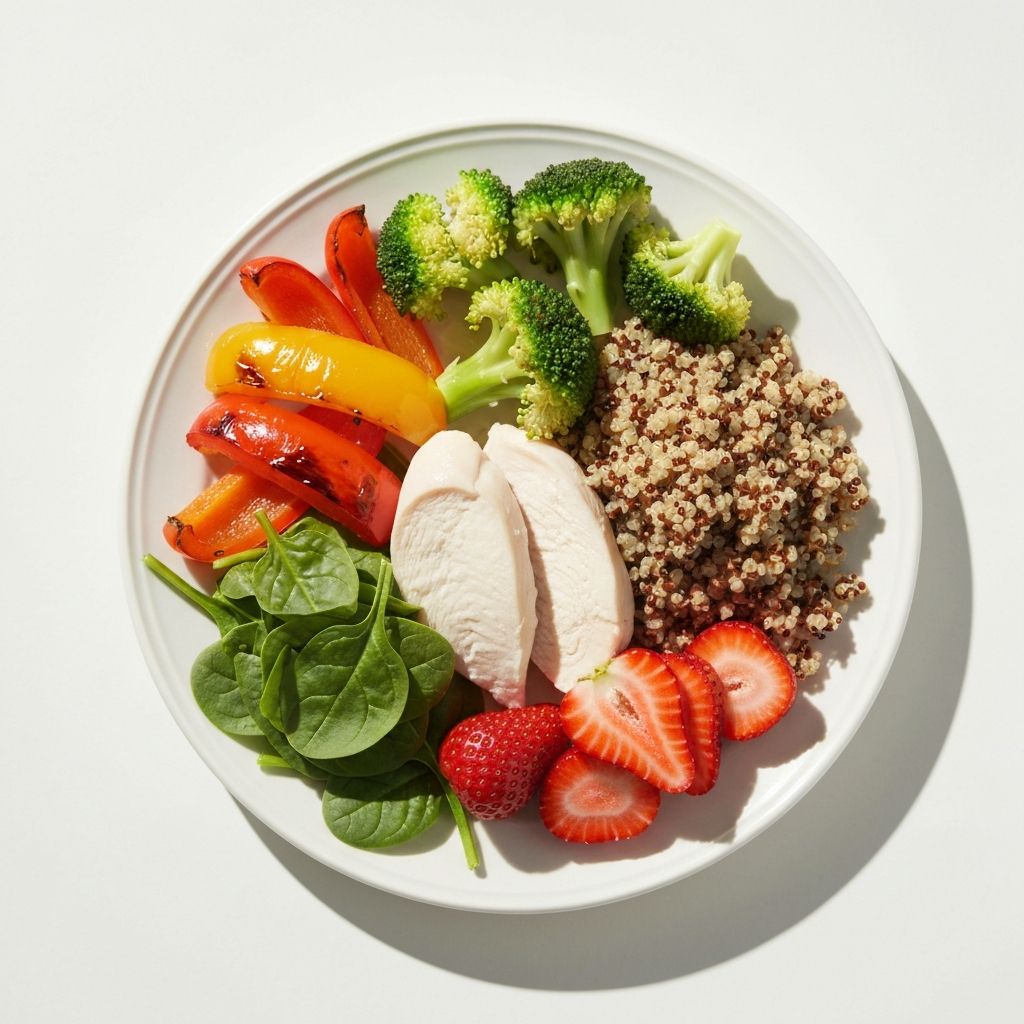
Some approaches to meal composition involve thinking about how different foods might be distributed on a plate. Common patterns include allocating portions of the plate to vegetables, proteins, and grains, though the specific proportions vary.
These concepts serve as general frameworks rather than rigid rules, and actual meal composition varies significantly based on many factors.
Variety Principles
Including variety in food choices is often discussed in the context of balanced eating. This might involve eating different types of foods within categories, trying foods of different colors, or rotating through different ingredients over time.
The extent and type of variety people incorporate depends on factors including food availability, preferences, and cooking knowledge.
Meal Timing Patterns
How foods are distributed across different eating occasions throughout the day is another aspect of meal planning. Common patterns include three main meals, or combinations of meals and smaller eating occasions, though significant variation exists.
Practical Implementation in Cooking
Translating concepts of balanced nutrition into actual cooking practices involves various considerations and approaches.
Recipe Selection
Choosing recipes that incorporate multiple food groups is one way people approach balanced meal preparation. Many recipes naturally combine vegetables, proteins, and grains or other components.
Recipe traditions from different cultures often reflect balanced composition principles, though they may be expressed in different ways.
Component Combination
Some people prepare separate components and combine them at meal time. This might involve preparing a protein, a vegetable dish, and a grain or starch separately, then serving them together.
This approach allows for flexibility in combining components in different ways across different meals.
One-Dish Meals
Certain types of dishes naturally incorporate multiple food groups in a single preparation. Soups, stews, casseroles, stir-fries, and similar preparations often include vegetables, proteins, and sometimes grains within one dish.
Factors Influencing Food Choices
Many factors influence how people approach food selection and meal composition beyond nutritional considerations alone.
Taste and Preference
Personal taste preferences significantly influence food choices. People tend to select and prepare foods they find enjoyable and satisfying.
Cultural Context
Cultural backgrounds and traditions strongly influence food choices and meal patterns. Different cultures have distinct approaches to meal composition and food combination.
Practical Considerations
Factors such as time availability, cooking skills, ingredient accessibility, and budget constraints all affect how meals are planned and prepared.
Individual Circumstances
Personal circumstances, life stages, activity levels, and other individual factors contribute to how people approach their food choices and meal preparation.
Seasonal and Local Variations
Food availability varies by season and location, which influences meal composition. Many cooking traditions incorporate seasonal patterns, using foods when they are locally available.
This variability means that balanced meal preparation might look quite different in different places or at different times of year, while still incorporating variety and multiple food groups.
Flexibility in Application
Concepts of balanced nutrition are applied with varying degrees of flexibility. Some people think about balance at each meal, while others consider balance over the course of a day or even longer periods.
The specific way these concepts are applied depends on individual preferences, circumstances, and how people prefer to organize their eating patterns.
Evolution of Eating Patterns
How people approach meal composition and food selection often evolves over time. Changes in life circumstances, exposure to new foods and cooking methods, and shifts in preferences all contribute to evolution in eating patterns.
What works well at one time or in one situation may be adapted or changed as circumstances shift.
Cultural Perspectives on Balance
Different cultural traditions have their own concepts and approaches related to balanced eating. These may be expressed through traditional food combinations, meal structures, or principles about food harmony.
Understanding that multiple valid approaches exist provides context for the diversity of meal patterns observed globally.
Information and Individual Decisions
While general information about nutrition and food groups is widely available, how individuals apply this information involves personal decision-making based on their specific situations, preferences, and circumstances.
The relationship between nutritional concepts and actual eating practices is complex and influenced by many factors beyond information alone.
Educational Context
This article provides educational information about concepts related to balanced nutrition in meal preparation. It describes general principles and approaches as they are commonly understood and discussed.
The information presented is not nutritional advice or medical guidance. It does not provide recommendations for individual dietary choices or health-related decisions.
Individual nutritional needs vary based on many factors. Decisions about food choices and eating patterns should be based on personal circumstances, preferences, and appropriate consultation where applicable.
For specific nutritional guidance or health-related dietary information, consult with qualified healthcare or nutrition professionals.