Practical Meal Prep Tips
February 2026
Understanding Meal Preparation
Meal preparation, often referred to as meal prep, is a practice that involves organizing and preparing food components in advance of regular meal times. This concept has become a common topic of discussion in contexts related to everyday cooking and food organization.
The practice can take various forms depending on individual circumstances, preferences, and available time. Some people prepare complete meals in advance, while others focus on preparing individual components that can be combined later.
Common Approaches to Meal Preparation
Different approaches to meal preparation exist, each with its own characteristics and considerations. Understanding these various methods provides context for how people organize their cooking activities.
Batch Cooking
Batch cooking refers to the practice of preparing larger quantities of food at once, which are then portioned and stored for later consumption. This approach is often used for components such as grains, proteins, or complete dishes.
People who use this method typically dedicate specific time periods to cooking activities, preparing multiple servings that can be consumed over several days. The specifics of this approach vary based on individual circumstances and preferences.
Component Preparation
Component preparation involves preparing individual elements of meals separately, which can later be combined in different ways. This might include washing and cutting vegetables, cooking proteins, or preparing grains and legumes.
This approach allows for flexibility in meal assembly, as prepared components can be mixed and matched according to preference or availability at meal time.
Partial Preparation
Some individuals prefer partial preparation, where certain time-consuming steps are completed in advance while final cooking occurs closer to meal time. This might involve marinating proteins, preparing sauces, or organizing ingredients for specific recipes.
Factors in Meal Preparation Planning
Various factors influence how individuals approach meal preparation. These considerations help explain the diversity of practices observed in this area.
Time Availability
The amount of time available for cooking activities is a significant factor in determining meal preparation approaches. Some people have specific blocks of time they can dedicate to preparation, while others work with more fragmented schedules.
Storage Capacity
Available storage space, including refrigeration and freezer capacity, affects what types of preparation are practical. Different storage situations lead to different preparation strategies.
Food Preferences
Individual and household food preferences influence what items are prepared and how they are organized. Some foods maintain quality better when prepared in advance, while others are better prepared fresh.
Cooking Skills
Familiarity with cooking techniques and food handling affects how people approach meal preparation. Different skill levels lead to different strategies and approaches.
Common Practices in Organization
When engaging in meal preparation activities, people often employ various organizational practices. These practices help manage the process and maintain food quality.
Container Systems
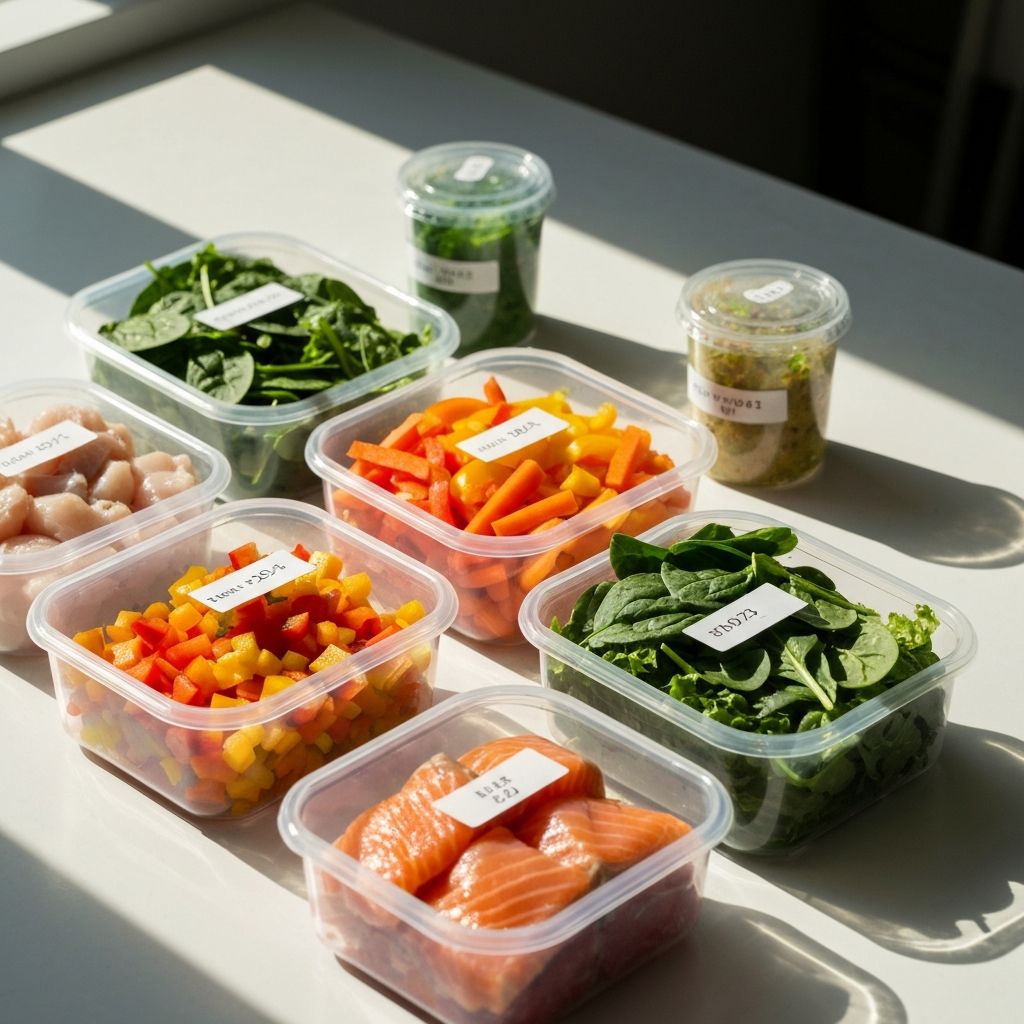
The use of storage containers is a common feature of meal preparation. Different types of containers serve different purposes, from individual portion containers to larger batch storage options.
Labeling Methods
Many people use labeling systems to track prepared items, including information about contents and preparation dates. This practice helps manage inventory and food freshness.
Storage Organization
Organizing prepared items in refrigerators or freezers is part of meal preparation practice. Different organizational approaches exist, from grouping by meal type to organizing by preparation date.
Considerations for Food Safety
Food safety considerations are relevant to meal preparation practices. Understanding basic principles of food storage and handling is important when preparing food in advance.
Proper cooling of cooked foods, appropriate storage temperatures, and awareness of storage duration are all factors that people consider when preparing meals in advance. These considerations are part of general food handling knowledge.
Variations in Practice
Meal preparation practices vary significantly across different contexts and circumstances. Cultural backgrounds, living situations, household compositions, and personal preferences all contribute to this variation.
What works well in one situation may not be practical in another. The diversity of approaches reflects the many different ways people manage their daily food preparation needs.
Educational Context
This article provides educational information about meal preparation concepts and practices. It describes various approaches and considerations as they are commonly understood and practiced.
The information presented is not intended as personal guidance or recommendations for individual circumstances. Meal preparation practices should be based on individual needs, preferences, and situations.
Food safety practices should follow appropriate guidelines and standards. For specific food safety information, consult relevant official resources.